
AANHPI Heritage Month
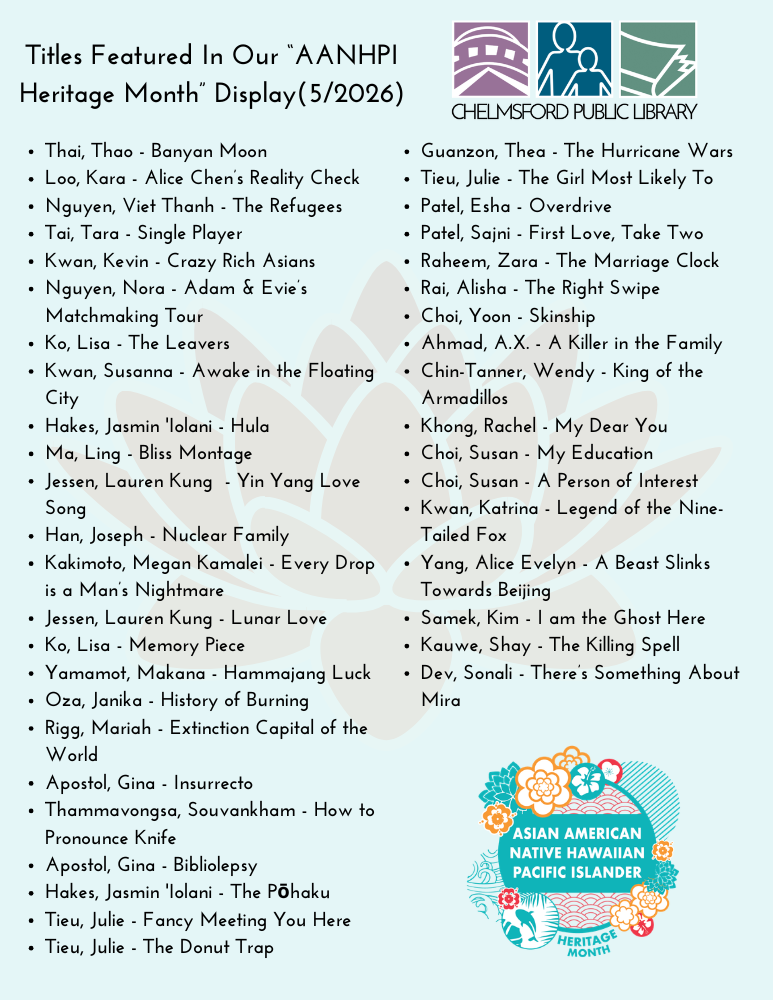
Each May, we take time to celebrate and recognize the culture, history, and contributions of Asian Americans, Native Hawaiians, and Pacific Islanders (AANHPI). You may also see this referred to as Asian American and Pacific Islander (AAPI) Heritage Month. The Federal Asian Pacific American Council (FAPAC) has announced the May 2026 AANHPI Heritage Month theme is “Power in Unity: Strengthening Communities Together.” This theme is meant to highlight the importance of leveraging collective power, telling stories, and being bridge builders in communities. You can find the history of the celebration on the FAPAC website, along with additional resources. You can also visit our display area for some great reads written by and about these Americans. Check out some of these books:
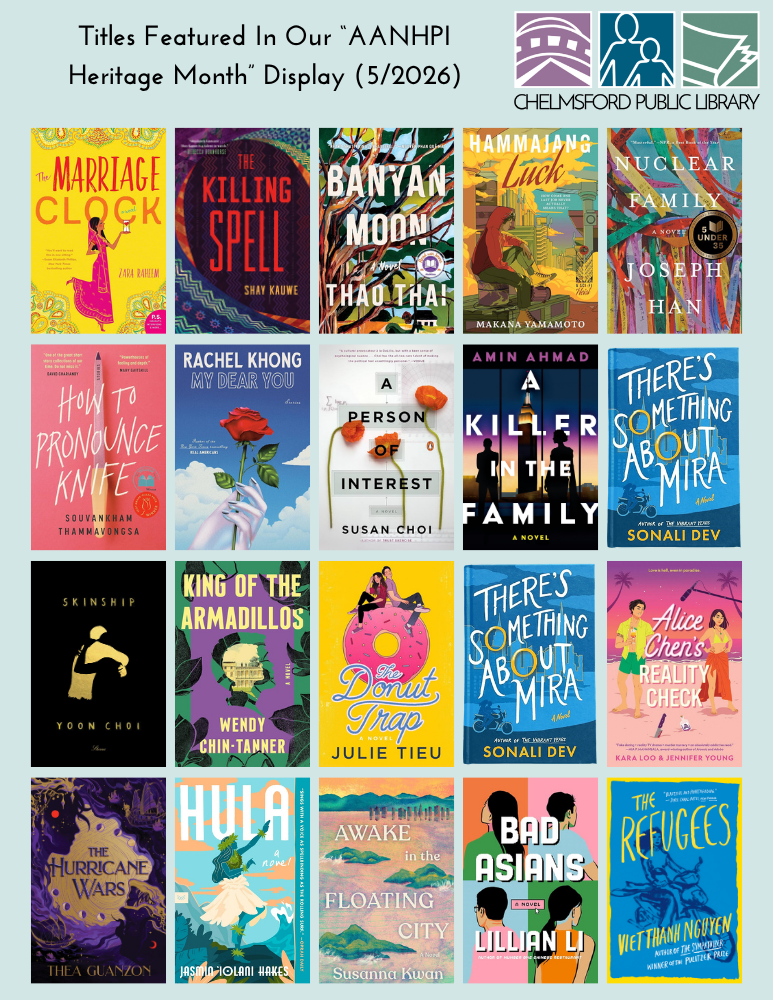
Jasmin ‘Iolani Hakes grew up in Hawai'i and has spoken extensively about her mixed Japanese, Filipino, Portuguese, and (possibly) Native Hawaiian roots. In Hula, "a young daughter of the legendary Hawaiian Naupaka dynasty dreams of healing the rift in her family by competing in and winning the next Miss Aloha Hula contest and proving herself worthy of carrying on her family’s name."
If you're in the mood for something more contemporary, turn to Sonali Dev. In her latest release, How Simi Got Her Groove Back, "The Naik sisters escaped their traumatic past in Mumbai to come to the States, but their journeys have been vastly different. Simi is working toward a bright future as a pediatric nurse in a small town in Kentucky when Rupi shows up at her door in distress, on the run, and as always, dragging trouble in her wake. With Rupi's safety in jeopardy, the sisters hatch a desperate plan to keep her in the country: Rupi must get married and fast even if it means Simi recruiting the man she's been secretly dating as her sister's groom. A perfect plan? Not quite. But there aren't many alternatives. As the big day inches closer, Simi and Rupi face a storm of wedding shenanigans and romantic surprises, not to mention sisterly jealousies. As the stakes and tensions rise, will their secrets tear them apart or will they find a way to risk everything for love?"
Like the first pick, Nuclear Family is set (at least partially) in Joseph Han's home state of Hawai'i. "Mr. and Mrs. Cho run a successful chain of Hawai'ian plate lunch restaurants, and their adult children are finding their way in the world: 21-year-old Grace is graduating in a few months, and 25-year-old Jacob is teaching English in Seoul. They're set to take over the restaurants when Umma and Appa retire. But when Jacob is captured by the South Korean government for attempting to run across the DMZ, the Chos' peaceful lives are shattered. What could possess Jacob to do something so stupid? The Chos don't know that Jacob has been literally possessed by his wily grandfather's ghost, don't know that Jacob is hiding his bisexuality and confusion over his identity as a Korean-American; they don't know that Grace is constantly stoned and plotting her escape from the island and her family's expectations. The children don't know the burdens of their immigrant parents. Joseph Han draws from Korean myth to explore the generational trauma experienced by families shattered by partition, and the impacts of American imperialism on the Korean peninsula. Nuclear Family is a spectacular debut novel-at once devastating and hilarious-about the memories that bind and divide families, and the yearning for home."